Archive for the 'Global capitalism' Category

Global capitalism, Politics, Society, Travel, colonialism, history, racism

Machu Picchu: “100 years of prostitution of Andean culture”

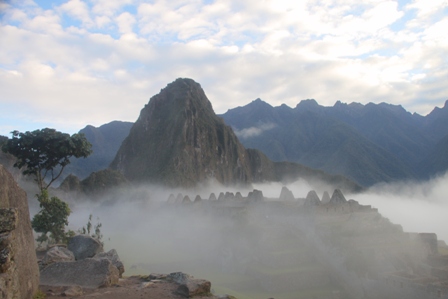
This month saw the 100th anniversary of the discovery of Machu Picchu. Its discovery by the West, that is: it was in July 1911 that Hiram Bingham, a Yale historian, was led to the already 400-year old site by a local shepherd boy, and announced the presence of the Machu Picchu estate to the world.

Machu Picchu, morning mist

I visited Machu Picchu a couple of days before its anniversary; it was glorious. A sublime city in a sublime location; the hundreds of tourists walking around could not detract from its wonderfulness. I was back in nearby Cusco, “the heart of America” for Che Guevara, and capital of the Inca empire, for the anniversary itself. To celebrate, Cusco’s main plaza saw parades, a stage with big screens, and a Peruvian folk/rock band in the evening. It also saw low-key protests, including one banner that particularly caught my eye: “100 años de la prostitución de la cultura andina”.

Elsewhere on the streets, the Incas’ conquered descendants mainly went about their business; selling chewing gum and proffering beautiful and often hand-made gloves and ch’ullus (traditional hats made from alpaca wool) to the hoards of foreign tourists, at knock down prices. Continue Reading »

Global capitalism, Politics, Travel

Something rotten in the state of Peru

Peru must, I think, have the most dysfunctional democracy I have encountered yet on my travels. And after the US, Nicaragua, Guatemala and Honduras, that’s saying something.

Tomorrow Peruvians go to the polls to decide how to vote in their Presidential election. There are only two candidates left: Ollanta Humala, a left-wing military officer and previous presidential candidate, and “Keiko”.

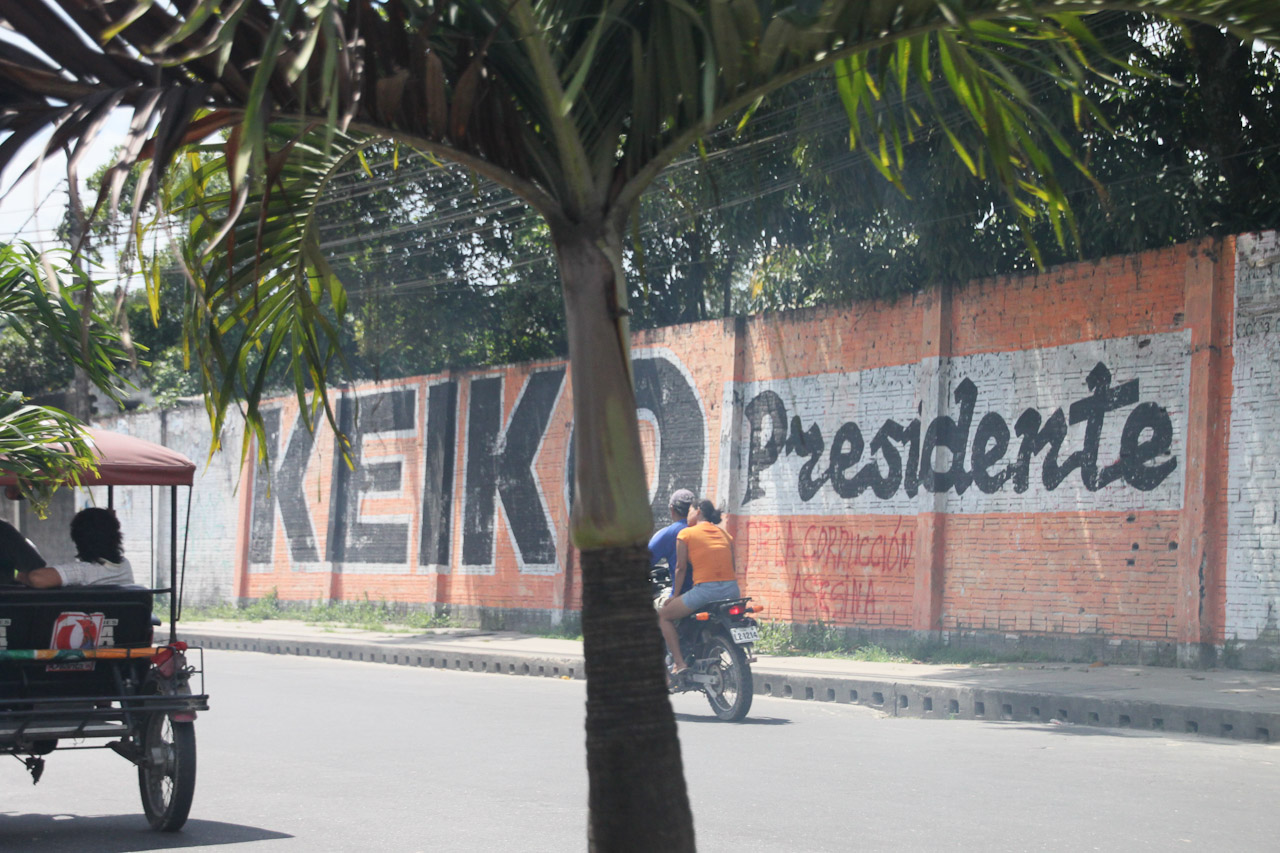
Keiko propaganda

Keiko propaganda - below is grafited "corruption" and "murderer"

“Keiko” is now such a household brand in Peru that nobody need say her family name: Fujimori. A name that could – or at least should – strike fear into many Peruvians. As President of Peru throughout the 1990s, Keiko’s father Alberto Fujimori first enacted wide-ranging neoliberal reforms, called the Fujishock. Electricity costs quintupled, water prices rose eightfold, and gasoline prices rose 3000%. Yet Peru was made safe for international capitalism. Then, feeling that Congress was holding him back, with the support of the military he carried out a presidential coup, which was roundly condemned by the international community. Strangely – and this is the worrying thing about the Peruvian national mindset – the coup was welcomed by the public, according to numerous polls. Continue Reading »

America, Global capitalism, Society

Is Charlie Sheen everything that’s wrong with America?

I didn’t expect my next blog post to be about Charlie Sheen. I am writing a long comparative history of the Cuban and Guatemalan revolutions, but it seems to be without end, so I thought dissing “Two and a Half Men” would be some comparatively low-hanging fruit.

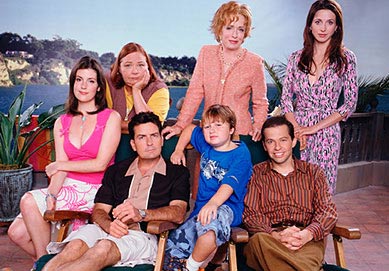
TwoandaHalfMen-CastThe dreaded sit-com was on in the corner of a hostel where I stayed for an afternoon in the Colombian city of Cali a few days ago. I asked casually of a young English tourist whether anybody actually found “Two and a Half Men” funny. “Are you kidding?” she asked. “It’s like the best thing on telly. It’s hilarious!”. I was put on the back foot, clearly the ‘uncool’ one in the room, and when I protested that “it doesn’t really seem to be about anything” she explained “it’s about having sex, drinking, taking drugs and getting fucked up. If you don’t like any of those things, then yeah, you won’t enjoy it”. Which made me feel even more on the back foot, obviously. To make me feel better an intelligent Israeli traveller broadly sided with my take on things. I observed to the English girl that she didn’t seem to be laughing very much at it, to which she claimed she just wasn’t paying attention. But I did pay attention to it, and, like all the other times I’ve ever seen it, I found it spectacularly unfunny, and after a few minutes clichéd, repetitive and depressing. I agree with the critic in The Australian who called it a “sometimes creepy, misogynistic comedy”, and in the New York Daily News who called it “occasionally funny”. It might be about sex, but it seems to be about having unfulfilling, predictable, boring sex. It might be about drugs and drinking but there doesn’t seem to be much fun involved. There instead seems to be lots of dissatisfaction, rather a lot of arrogance, and repeated trips to the shrink. Continue Reading »

Climate Change, Global capitalism, Politics, Society

Climate Change and Cancún – The politicians have failed. Now it’s up to us

The outcome this week of the climate change conference in Cancún can be read two ways. Yes, multilateralism (although not the role of the UN) has been saved, and as one minister timidly put it “people are still talking to each other”. But as Greenpeace have commented, “The conference may have saved the multilateral process after last year’s abject failure in Copenhagen, but we have not yet been saved from climate change.”

Green MP Caroline Lucas used very similar wording: “It’s a very weak deal – enough to keep the ongoing negotiation process alive, but not enough to save the climate.”

And although both organisations have given encouragement to governments for the little that has been done, when it comes down to it, all that matters is the bottom line, and the bottom line is “What kind of world will this agreement create?”

Unfortunately, according to scientific commentators such as those at Climate Tracker Action, the agreement will deliver 3.2 degrees Celsius of overall global warming. The Bolivian government was more pessimistic, estimating 4 degrees. While the difference between 2 or 4 degrees on a summer’s day doesn’t mean much, averaged out all over the world, it’s disastrous. Continue Reading »

Global capitalism, Politics, Society, Travel, colonialism, slavery

The Bahamas – sun, sea, sand & slavery

Today is Emancipation Day, not just in the Bahamas, but all across the former British empire. 176 years ago – in 1834 – my nation, Britain, finally abolished slavery. The Bahamas as a nation, however, is only five years older than me… not until 1973 did the Bahamas became independent from Britain – they celebrated the birthday the weekend I arrived.

This island and its family islands of the Commonwealth of the Bahamas share alot of history in common with the Caribbean as whole; the region was home to several million peaceful native Americans, who were almost completely wiped out by the Spanish and then by the English, through slavery, outright murder and disease. Both countries then imported black slaves stolen from Africa, depopulating some areas by between 60 and 90 per cent. For a time in the 17th century the Bahamas was administered from the Carolinas, and from 1718 directly by the British. These are young cultures, with their populations all from somewhere else – most of them moved here by force.
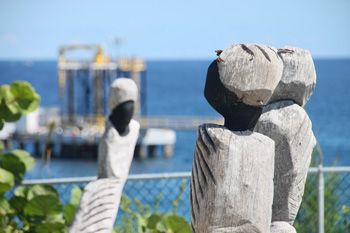
Sacred Space by Antonious RobertsOne of the most moving things I’ve experienced on the island so far is an artwork “Sacred Space” by Bahamian artist Antonious Roberts; figures of slave women carved out of casuarina trees, still rooted in the ground; they look out over the ocean, towards Africa. Even more moving, a few yards away are the “Pirate Steps”, more accurately called the Slave Steps because up them from about 1785 onwards were marched thousands of African slaves who were brought here to work for the ruling white people on the island. At the bottom of the steps I found a young white American couple from the South, larking about and taking photos of eachother on the rocks, unaware or uncaring of how their predecessors had driven thousands of other human beings across those rocks like cattle. A few yards further along, the same harbour that berthed the slave ships now accommodates Esso oil and gas tankers.

So most people in these countries like the Bahamas have been the working class, working for someone else’s benefit, for not just decades but centuries. Since I’ve been here I’ve met black Bahamians who are film-makers, business people, university staff and professors, poets and authors. People who are well-travelled, highly intelligent, thoughtful, conscientious and considerate. But black society in Continue Reading »