Archive for the 'Travel' Category

Climate Change, Fuel, Travel

“The plane will go anyway”

I choose not to fly as much as possible. People don’t like to hear this, because they can already feel a potential judgment coming of their own actions or choices. But let me explain why first.

It’s not because I’m scared or because I don’t like looking at the clouds from above (in fact I do): it is just unfortunately the case that flying by air is just an incredibly quick way to blow all of the good karma you built up by cycling and reusing plastic bags. After space travel and splitting the atom it’s probably the fastest way you could burn fuel and create pollution. You’d have to cross the Atlantic by jet ski in order to be more environmentally unfriendly.

Everywhere I go however (by bus, boat and train) from Toronto to Mexico, from La Paz to Rio de Janeiro, I hear the exact same words, from different people, repeated with eeiree similarity: “But the plane will be going anyway. So why not be on it?”.

It’s fascinating to me that humans can trick ourselves with statements such as this when we know it would be morally reprehensible to respond to “look, we’re gonna gang-rape this girl anyway, so you might as well join in”. Continue Reading »

Global capitalism, Politics, Society, Travel, colonialism, history, racism

Machu Picchu: “100 years of prostitution of Andean culture”

This month saw the 100th anniversary of the discovery of Machu Picchu. Its discovery by the West, that is: it was in July 1911 that Hiram Bingham, a Yale historian, was led to the already 400-year old site by a local shepherd boy, and announced the presence of the Machu Picchu estate to the world.

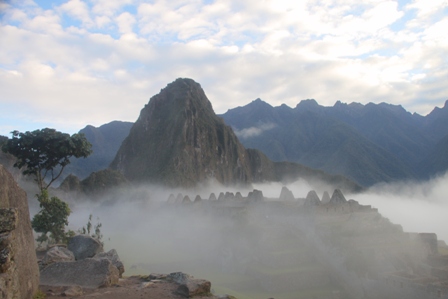
Machu Picchu, morning mist

I visited Machu Picchu a couple of days before its anniversary; it was glorious. A sublime city in a sublime location; the hundreds of tourists walking around could not detract from its wonderfulness. I was back in nearby Cusco, “the heart of America” for Che Guevara, and capital of the Inca empire, for the anniversary itself. To celebrate, Cusco’s main plaza saw parades, a stage with big screens, and a Peruvian folk/rock band in the evening. It also saw low-key protests, including one banner that particularly caught my eye: “100 años de la prostitución de la cultura andina”.

Elsewhere on the streets, the Incas’ conquered descendants mainly went about their business; selling chewing gum and proffering beautiful and often hand-made gloves and ch’ullus (traditional hats made from alpaca wool) to the hoards of foreign tourists, at knock down prices. Continue Reading »

Global capitalism, Politics, Travel

Something rotten in the state of Peru

Peru must, I think, have the most dysfunctional democracy I have encountered yet on my travels. And after the US, Nicaragua, Guatemala and Honduras, that’s saying something.

Tomorrow Peruvians go to the polls to decide how to vote in their Presidential election. There are only two candidates left: Ollanta Humala, a left-wing military officer and previous presidential candidate, and “Keiko”.

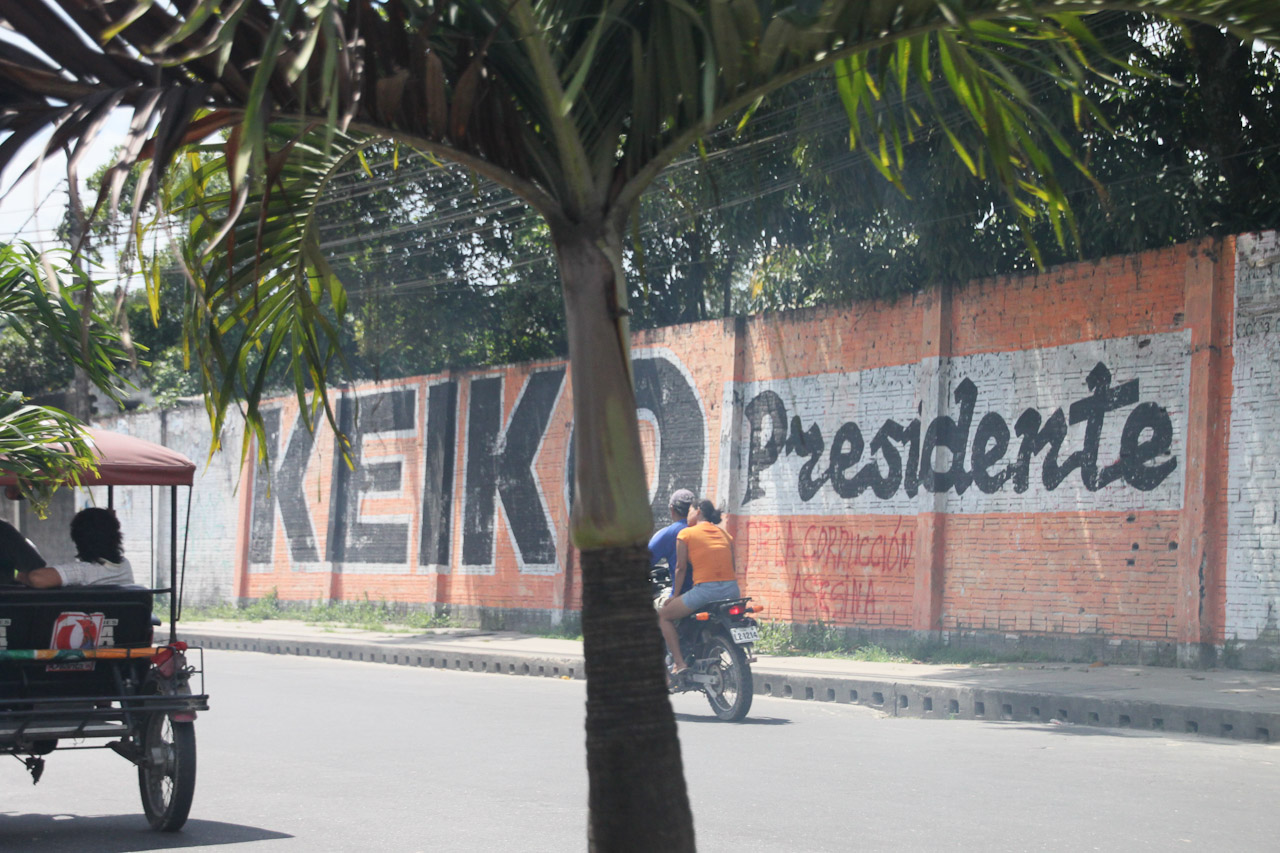
Keiko propaganda

Keiko propaganda - below is grafited "corruption" and "murderer"

“Keiko” is now such a household brand in Peru that nobody need say her family name: Fujimori. A name that could – or at least should – strike fear into many Peruvians. As President of Peru throughout the 1990s, Keiko’s father Alberto Fujimori first enacted wide-ranging neoliberal reforms, called the Fujishock. Electricity costs quintupled, water prices rose eightfold, and gasoline prices rose 3000%. Yet Peru was made safe for international capitalism. Then, feeling that Congress was holding him back, with the support of the military he carried out a presidential coup, which was roundly condemned by the international community. Strangely – and this is the worrying thing about the Peruvian national mindset – the coup was welcomed by the public, according to numerous polls. Continue Reading »

America, Climate Change, Fuel, Society, Travel

4 tuktuks, 3 airplanes and a Mississippi steamboat – my Carbon Footprint in 2010

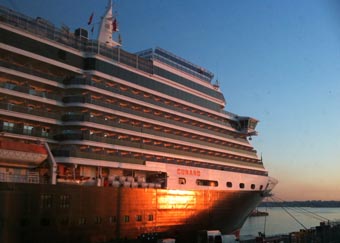
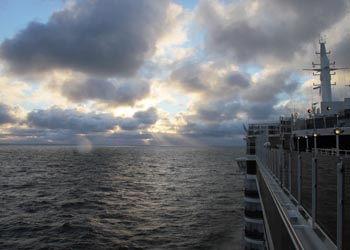
I’ve done a lot of travelling in 2010. Namely across the Atlantic, looping around the USA, into the Caribbean and travelling down Central America as far as Nicaragua. So naturally I’m concerned about what the cost is to our shared natural environment of all my wanderings. From the outset I’ve tried to travel as environmentally friendly as possible, which informed my decision to travel across the Atlantic by ship

Even so, my travelling must have had a big impact on the environment that we all have a stake in, and over the New Year I’ve been trying to figure out to my satisfaction what that might be, and how good an idea (for everybody else and our shared global environment) me travelling around having a good time is.

To give you an idea of why I think this is important, have a look at my recent article that details how the world’s politicians have failed us when it comes to combatting climate change, and how we are, unfortunately to say the least, heading for an all-out global catastrophe.

I’ve worked out a very approximate answer in terms of a “carbon footprint”, measured in metric tonnes of carbon dioxide (* see note 1).

But rather than first list a bunch of figures I want to look back on exactly how far I’ve come, compare that to my “carbon budget”, and consider the choices I made and what I got out of it.

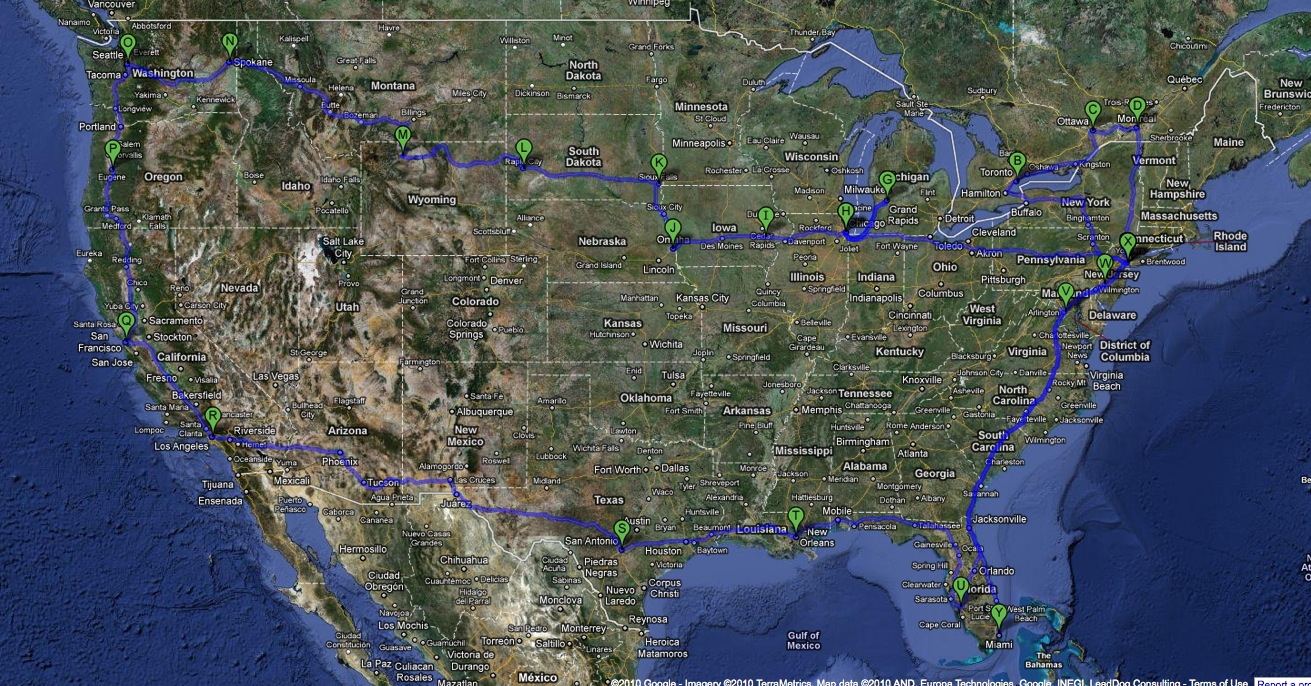
I arrived in New York City at the beginning of January on a ship from Southampton, England. After visiting Philadelphia, Boston, Washington D.C., Toronto, Ottawa and Montreal by long-distance bus and train, in April I moved to Chicago (by train) and spent 3 nice weeks there. I then hired a car (a hybrid electric Toyota Prius) and drove 5000 miles across the West through Seattle and down through Portland and Eugene to San Francisco, where I left the car.

13 000 miles around the USA

13 000 miles around the USA

I then got a train to L.A., took a campervan around wine country for a few days, and then took a 3-night train ride to New Orleans (these are big distances…). I then took bus and car (with my parents) to Florida, and then finally visited New York City by train again very briefly for the 4th of July before returning by train to Florida. Up against my visa time limit, I flew out of the country to Nassau, The Bahamas, where I stayed for a month and a half. I then flew (there is no other option) to Cuba, and then from Cuba to Cancun (the closest exit). I only took buses after that.

Just taking the carbon cost of the first 6 months in the USA, the obvious big costs are the ship to the Americas, the private car road-trip across the West, the campervan (surprisingly bad) and the flight out of the country. The ship accounts for a huge 1816.1kg of CO2 (nearly two tonnes… although I calculated at the time, marginally less than a transatlantic flight (* see note 2). Continue Reading »

Society, Travel, Vegetarianism

Why am I vegetarian?

It’s something I get asked often enough. I’ve been travelling for nearly eight months now and it’s a daily question: if not from other people but for myself. Even in the USA, finding vegetarian food was not the easiest thing. Finding vegan food was harder again, and, yes, I quite often ate vegetarian instead of vegan simply in order to have some variety and to be able to participate in at least some of the culture. And after eleven years of being vegetarian, and ten years of being essentially vegan, I wanted to re-examine the reasons for my choice in the first place. Certainly now that I’ve arrived in Cuba I have a feeling that vegetarianism is going to become harder and harder as I travel down into Central and South America. I’ve only been here one night and already I’ve had three occasions where the words “Soy vegetariano” have been greeted with the same mix of incredulous surprise and pity. I’ve not had any scary experiences so far on my eight month travels, but then until yesterday in the Bahamas I’d been living with a vegetarian and a vegan. Looking ahead to Mexico I watched a YouTube video online that showed the making of a typical flour tortilla. The standard ingredients are flour, water and pork fat. And even if I was to ask for just some healthy steamed vegetables wrapped in a flour tortilla, apparently the done thing to do is to smear some more pork fat onto the tortilla to provide that all-important basting.

      It’s obvious that I will need to know very clearly why and how I am vegetarian if I am to have any hope of making clear food choices in Latin America that don’t stress me out on a daily basis. I had a great chance to re-examine my commitment to being vegetarian when a friend in New York City lent me the new book “Eating Animals” by Jonathan Safran Foer. Safran Foer is a youngish Jewish novelist, living in Brooklyn with his wife and young son. He says he began researching the book as a way to explore his own on-off dabbling with vegetarianism and to discover what would be the best way to raise his new baby. Safran Foer begins the book as a meat-eater, and a fairly committed one at that, listing many good reasons why everyday human connections contribute to us sharing a culture of meat eating. Continue Reading »

Global capitalism, Politics, Society, Travel, colonialism, slavery

The Bahamas – sun, sea, sand & slavery

Today is Emancipation Day, not just in the Bahamas, but all across the former British empire. 176 years ago – in 1834 – my nation, Britain, finally abolished slavery. The Bahamas as a nation, however, is only five years older than me… not until 1973 did the Bahamas became independent from Britain – they celebrated the birthday the weekend I arrived.

This island and its family islands of the Commonwealth of the Bahamas share alot of history in common with the Caribbean as whole; the region was home to several million peaceful native Americans, who were almost completely wiped out by the Spanish and then by the English, through slavery, outright murder and disease. Both countries then imported black slaves stolen from Africa, depopulating some areas by between 60 and 90 per cent. For a time in the 17th century the Bahamas was administered from the Carolinas, and from 1718 directly by the British. These are young cultures, with their populations all from somewhere else – most of them moved here by force.

Sacred Space by Antonious RobertsOne of the most moving things I’ve experienced on the island so far is an artwork “Sacred Space” by Bahamian artist Antonious Roberts; figures of slave women carved out of casuarina trees, still rooted in the ground; they look out over the ocean, towards Africa. Even more moving, a few yards away are the “Pirate Steps”, more accurately called the Slave Steps because up them from about 1785 onwards were marched thousands of African slaves who were brought here to work for the ruling white people on the island. At the bottom of the steps I found a young white American couple from the South, larking about and taking photos of eachother on the rocks, unaware or uncaring of how their predecessors had driven thousands of other human beings across those rocks like cattle. A few yards further along, the same harbour that berthed the slave ships now accommodates Esso oil and gas tankers.

So most people in these countries like the Bahamas have been the working class, working for someone else’s benefit, for not just decades but centuries. Since I’ve been here I’ve met black Bahamians who are film-makers, business people, university staff and professors, poets and authors. People who are well-travelled, highly intelligent, thoughtful, conscientious and considerate. But black society in Continue Reading »

America, Green Party, Society, Travel

Canada… versus the USA

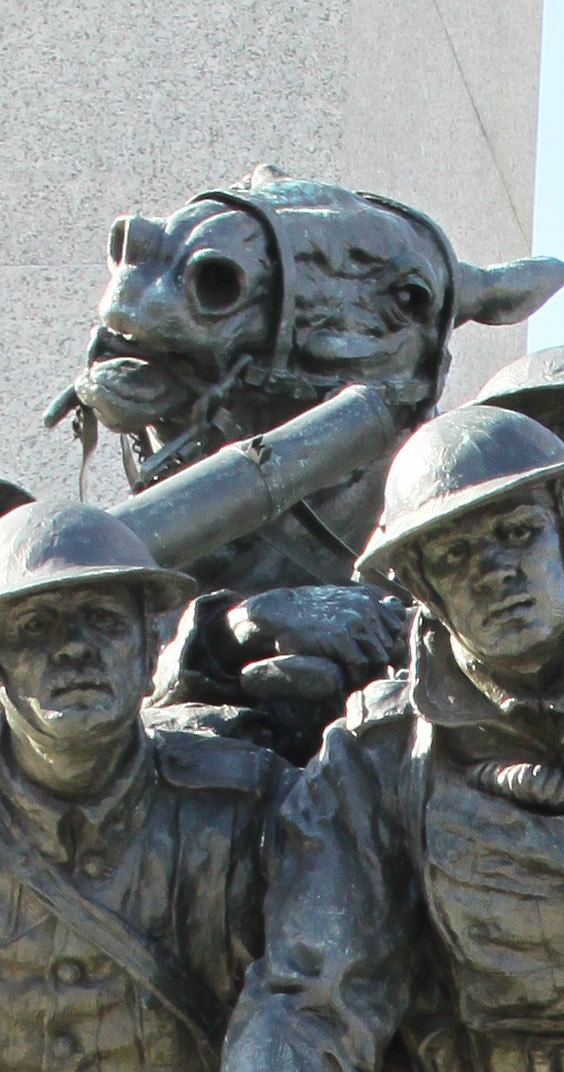
ottawa's war memorial

Ottawa's war memorial

I’ve spent less than a week in Canada, to my sadness.

After a day, the differences between here and the US were tangible. After nearly a week, the differences are overwhelming.

As a young English guy from Guildford told me at a bar in Toronto, Canada has all the advantages of the US (which for him were late licenses and plentiful weed) with none of the drawbacks. To drugs and alcohol I might also add: liveable human-scale cities, cosmopolitan cultures, a national respect for linguistic and ethnic diversity, a relaxed and positive sense of national identity, decent public transport, a progressive political system that publicly funds political parties and outlaws all corporate donations, a largely non-psychopathic government, great outdoors (although so far I’ve seen a lot of low-grade grassland (it’s not prairie – that was killed that long ago)), plenty of space and natural resources (a mixed blessing), good comedians (apparently) and surprisingly good beer.

In Ottawa and Toronto (although not Montreal) I saw a very low level of homelessness. In fact I saw almost nothing but healthy happy people, in good houses, with a very nice quality of life.

Frankly, its surprising any Americans still live in the US.

Did I mention, Canada also has universal health care?

Canada’s health care bill argument had some of the same elements of people crying “communist” as we’ve just seen in the US; but that debate was concluded 50 years ago, and unlike the US, not only did the best side win, but it achieved a genuinely-progressive result: single-payer healthcare, similar to Britain’s National Health Service.

Continue Reading »

Next »